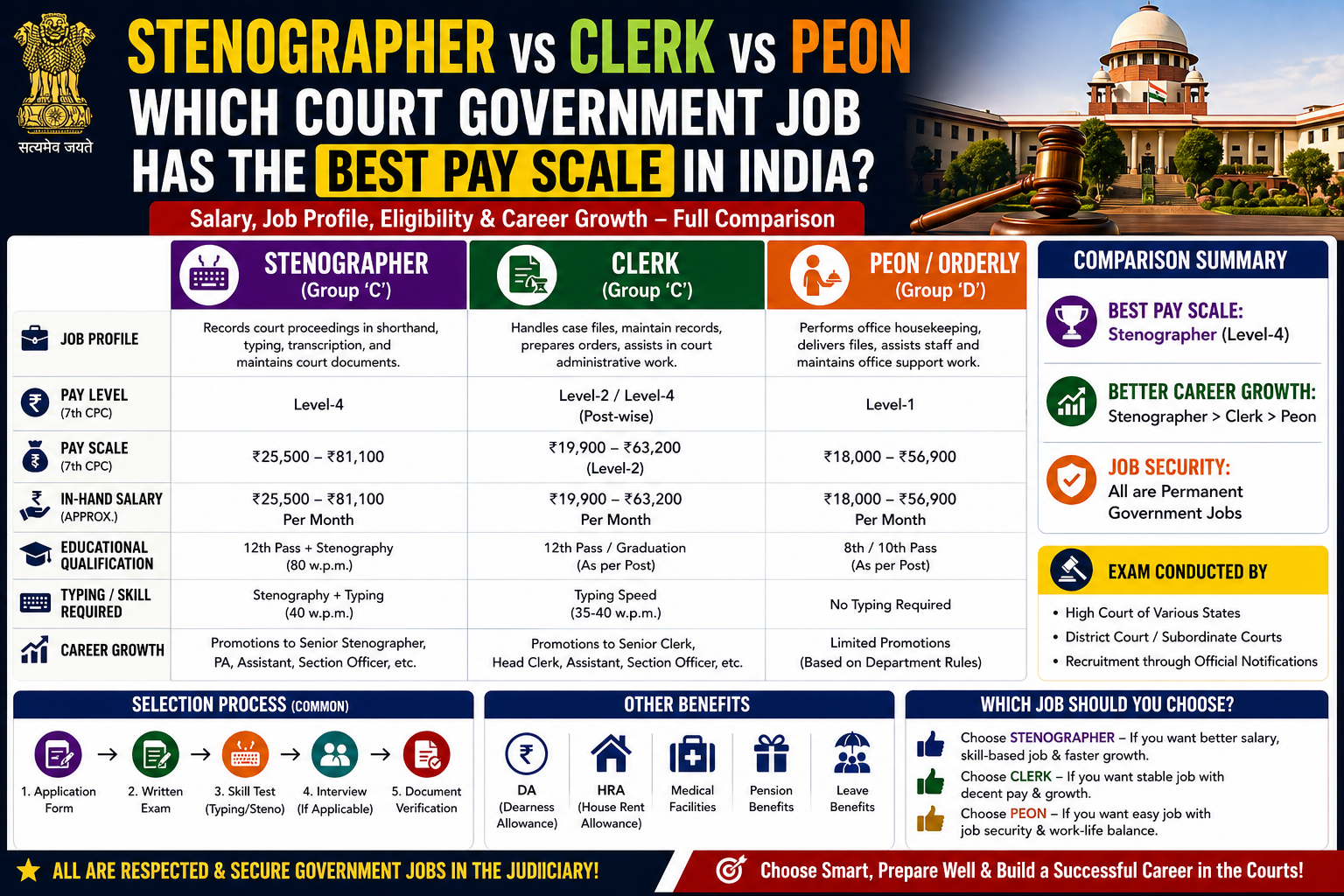
You want a court government job. You are choosing between Peon, Clerk, and Stenographer. The qualification gap between them is significant — and so is the salary gap. This complete comparison tells you exactly what each post pays, what it takes to get there, and which one makes the most financial sense in 2026.
The Three Posts — What Each Does
| Post | Core Work | Setting |
|---|---|---|
| Peon / Process Server | File delivery, court errands, serving summons, office assistance | Inside court premises |
| Clerk / Copyist / Typist | Data entry, record maintenance, typing orders, filing case papers | Court office/registry |
| Stenographer | Shorthand dictation of judge’s proceedings + transcription + court records | Courtroom + chambers |
The Stenographer sits closest to the judge — recording live proceedings in shorthand and transcribing into legal records. This proximity to court authority and the specialized skill required is why Stenographer pays significantly more.
Salary Comparison — Head to Head 2026
Central Government / Supreme Court Level
| Post | Pay Level | Basic Pay | In-Hand (Metro) |
|---|---|---|---|
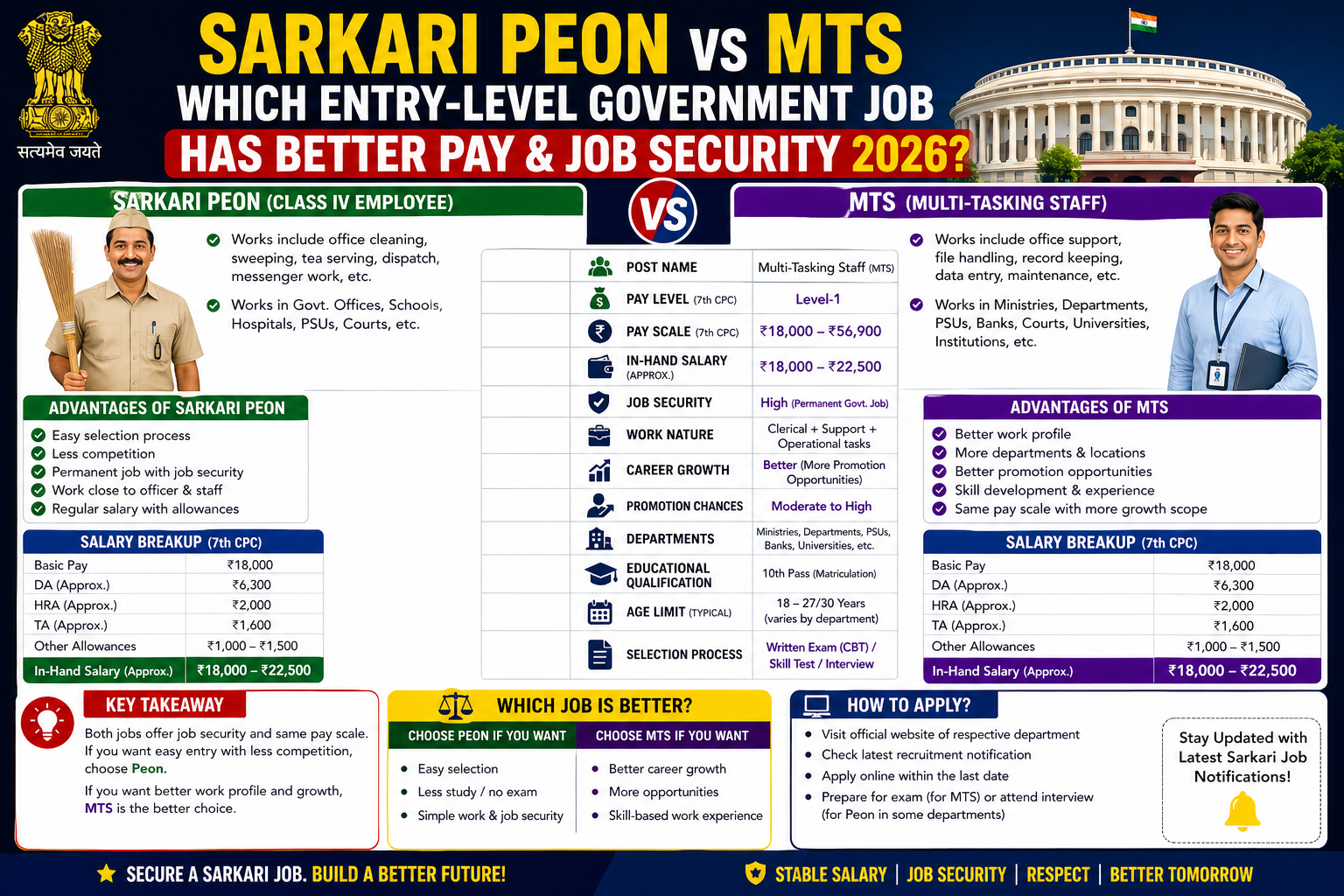
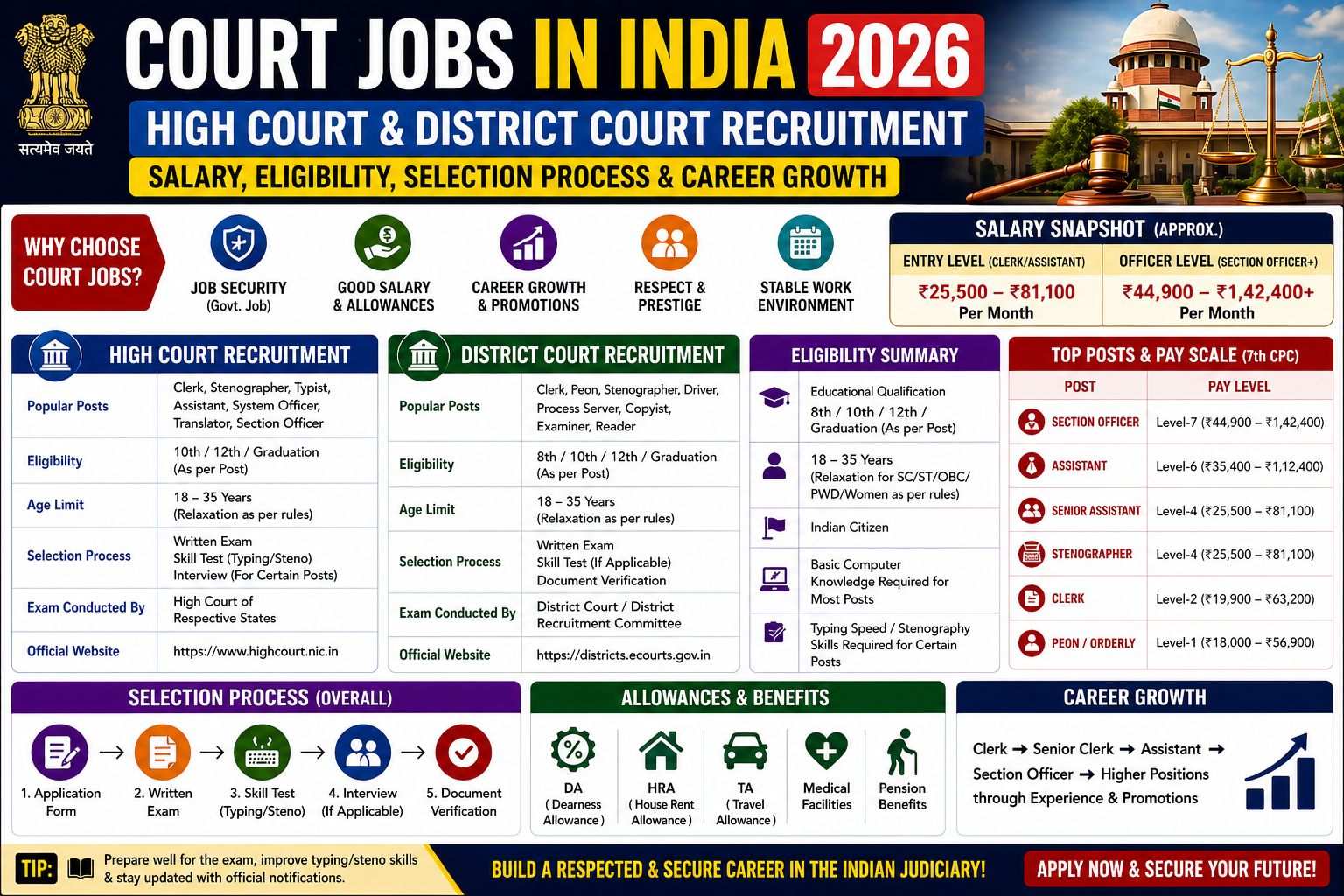
| Peon / MTS | Level 1 | ₹18,000 | ₹25,000–₹32,000 |
| Lower Division Clerk (LDC) | Level 2 | ₹19,900 | ₹28,000–₹35,000 |
| Clerk (UDC equivalent) | Level 4 | ₹25,500 | ₹38,000–₹48,000 |
| Stenographer Grade D | Level 4 | ₹25,500 | ₹38,000–₹48,000 |
| Stenographer Grade C | Level 6 | ₹35,400 | ₹52,000–₹65,000 |
| PA / Senior Stenographer | Level 7–8 | ₹44,900–₹47,600 | ₹65,000–₹78,000 |
High Court Level (State — Bombay Example)
| Post | Pay Scale | Approximate In-Hand |
|---|---|---|
| Peon / Hamal | ₹16,600–₹52,500 | ₹25,000–₹35,000 |
| Driver | ₹29,200–₹92,300 | ₹40,000–₹55,000 |
| Clerk | ₹29,200–₹92,300 | ₹42,000–₹58,000 |
| Stenographer Lower Grade | ₹49,100–₹1,55,800 | ₹68,000–₹88,000 |
| Stenographer Higher Grade | ₹56,100–₹1,77,500 | ₹80,000–₹1,05,000 |
District Court Level (State — Karnataka Example)
| Post | Pay Scale | Approximate In-Hand |
|---|---|---|
| Peon / Process Server | ₹17,000–₹28,940 | ₹25,000–₹35,000 |
| Typist / Copyist | ₹21,400–₹42,000 | ₹30,000–₹42,000 |
| Stenographer Grade III | ₹27,650–₹52,650 | ₹40,000–₹55,000 |
The salary gap at a glance:
- Peon in-hand: ₹25,000–₹35,000
- Clerk in-hand: ₹38,000–₹58,000
- Stenographer (High Court) in-hand: ₹68,000–₹1,05,000
At Bombay High Court, a Stenographer Higher Grade earns ₹50,000–₹70,000 more per month than a Peon in the same court. Over a year, that’s ₹6–8 lakh extra — from the same employer.
Eligibility Comparison
| Factor | Peon | Clerk | Stenographer Grade III | Stenographer Grade II/Higher |
|---|---|---|---|---|
| Minimum Education | 10th Pass | 12th Pass / Graduation | 12th Pass | Graduation |
| Typing Required | No | 30–40 WPM | 40 WPM | 40–50 WPM |
| Shorthand Required | No | No | 80 WPM | 100–120 WPM |
| Computer Knowledge | Basic | Required | Required | Required |
| Age Limit | 18–35 | 18–35 | 18–35 | 18–38 |
| Language Proficiency | Local language preferred | Local language + English | English (+ regional where specified) | English mandatory |
The Stenographer is the only post requiring a specialized skill (shorthand) that cannot be faked or rushed — it takes genuine months of practice. This skill barrier is exactly why steno salaries are so much higher.
Selection Process — All Three Posts
Peon / Process Server
- Academic merit based on 10th/12th marks (often)
- Brief interview (5–10 marks)
- Physical fitness check in some courts
- Easiest selection — no exam, no typing test in most courts
Clerk / Typist / Copyist
- Written exam (CBT/OMR): English, Reasoning, GK, Legal Awareness
- Typing Speed Test: 30–40 WPM (qualifying in nature)
- Document Verification
- Moderate selection — written exam + typing test
Stenographer
- Written exam: English, Reasoning, GK
- Shorthand Dictation Test: 80 WPM (District) to 100–120 WPM (High Court)
- Transcription Test: Accuracy within allowed error margin
- Document Verification
- Hardest selection — specialized shorthand skill decides everything
Career Growth — Which Post Grows Fastest?
| Post | First Promotion | Timeline | Final Grade |
|---|---|---|---|
| Peon | Process Server / Daftri | 8–12 years | Reaches UDC equivalent with decades of service |
| Clerk / LDC | UDC | 5–8 years | Section Officer / Bench Clerk (Level 6–7) |
| Steno Grade D/III | Steno Grade C | 5–7 years | PA / PS (Personal Secretary) — Level 8–10 |
| Steno Higher Grade | PA → PS → PSO | 8–12 years | Principal Private Secretary — Level 10–12 |
Steno career path is the fastest to senior grades. A High Court Stenographer who reaches Personal Secretary (PS) level earns ₹80,000–₹1,00,000/month — significantly above Clerk-track promotees of the same vintage.
Lifetime Earnings Gap — The Real Numbers
Consider three candidates joining the same High Court at age 25:
| Employee | Post | Entry Salary | After 15 Years | After 30 Years (Retirement) | Monthly Pension |
|---|---|---|---|---|---|
| A | Peon | ₹28,000 | ₹40,000–₹50,000 | ₹60,000–₹70,000 | ~₹9,000 |
| B | Clerk | ₹42,000 | ₹65,000–₹78,000 | ₹85,000–₹1,00,000 | ~₹12,750 |
| C | Stenographer (HG) | ₹80,000 | ₹1,00,000–₹1,20,000 | ₹1,30,000–₹1,60,000 | ~₹28,050 |
The pension difference between a Peon and a senior Stenographer is ₹19,000/month for life — a massive retirement income gap from the same government employer.
Which Should You Target? — Decision Framework
| Your Profile | Best Target |
|---|---|
| Only 10th pass, need job urgently | Peon / Process Server — easiest entry, permanent govt job |
| 12th pass, willing to learn typing | Clerk — good salary, manageable skill requirement |
| 12th pass, willing to invest 6–12 months in shorthand | Stenographer Grade III — best ROI on skill investment |
| Graduate, can do 100+ WPM shorthand | Stenographer Higher Grade / High Court Steno — highest court salary |
| Want court job + plan to appear for UPSC/SSC later | Clerk — steady income, manageable workload, time to prepare |
| Maximum salary from court sector | Stenographer Higher Grade at High Court — ₹80,000–₹1,05,000/month |
The Shorthand Investment — Is It Worth It?
For Stenographer Grade III (District Court), you need 80 WPM shorthand. Timeline to achieve this:
- Month 1–2: Learn Pitman/Hindi shorthand alphabets and basic outlines
- Month 3–4: Reach 40–50 WPM with daily 2-hour practice
- Month 5–6: Reach 60–70 WPM
- Month 7–9: Reach 80+ WPM with consistent accuracy
Investment: 9 months of practice + ₹5,000–₹15,000 coaching fees
Return: ₹40,000–₹55,000/month (District Court) vs ₹25,000 (Peon). The salary premium pays back the training cost in less than 1 month — making shorthand one of the best skill investments for any government job aspirant.
Final Verdict
| Winner By Category | Post |
|---|---|
| Highest Salary | Stenographer (Higher Grade / High Court) |
| Easiest to Get | Peon / Process Server |
| Best Value for 12th Pass | Clerk |
| Best Long-term Career | Stenographer |
| Highest Pension | Stenographer (Higher Grade) |
| Best Work-Life Balance | All three — court hours are the best in government sector |
If you can invest 9 months in learning shorthand, Stenographer is the only logical choice — it pays ₹40,000–₹70,000 more per month than Peon from the same employer, with a pension that stays ₹15,000–₹20,000 higher for the rest of your life after retirement.
If time or skill is a constraint, Clerk is the next best — steady ₹38,000–₹58,000 in-hand, simple typing test, and solid career growth to Section Officer level.
Peon is valid only when speed of joining matters more than salary — a permanent government job with court culture, decent benefits, and security, even if the pay starts low.
Preparing for court recruitment? Practice typing, English, Reasoning, and Legal GK topic-wise on PadhLe Buddy for free. Start today!